Showing posts with label entrepreneur. Show all posts

Monday, February 27, 2017

Meet Connell of Connell Smiles

 
Connell Green has been with the Helius Foundation for about seven months. His business, Connell Smiles, is a growing cookie company here in Durham, NC. Connell talks a little about what brought him to Helius:
 
“I had a bad accident about a few years ago. A support beam fell over my head; in the next years, I had to learn how to talk again, I underwent speech therapy, I had to learn alphabets and numbers all over again. It was a very hard time. But it was in this time that I asked God to help heal me, I asked Him to help me find my calling. One day, I had a vision; I saw a pair of golden hands, and I wondered what that meant. Later on, something else happened to me. I started to hear different types of baking ingredients whispered into my ear. Then it dawned upon me- God was telling me that my gift was to use my hands. I was still recovering physically when I started to knead dough. I would spend hours kneading dough, and then I started to notice that it was giving strength back to my arms and shoulders. I started kneading dough every day and after a while thought “Hey I better make something out of it,” so I made cookies, delicious cookies. Soon I started to give them away to people, and soon after I started selling them. This whole process was really a way that God healed me from the inside out. 

It’s been years now. And I still love making cookies; every time I bake, a part of me becomes energised. That’s my love, cookies are my babies. I see cookies as a tool to get people to relax. You know, have a cookie and some coffee, have a good time, relax for a moment, see what’s in you, see what’s around you. I hope to sell my cookies at even more stores, perhaps a couple of franchises way into the future. Helius has been great in helping me reach my goals. I joined about 7-8 months ago, and really I learned that the best teacher you can ever get is the one that can be honest with you, tells you when you haven’t pulled up to your standards, and lets you harness your strengths. Geraud from Helius has been this teacher to me. And now he’s connected me with Duke students who are helping me refine my business ideas and targets. I’m really thankful. "
 
We're thankful to be working with such an amazing and driven individual. And it is great seeing him working with so many others. We have no doubt that Connell Smiles will be bringing smiles to everyone throughout the Triangle very soon!


Wednesday, February 1, 2017

Meet Ayubi of Afrokat


Meet one of our entrepreneurs, Ayubi who owns Afrokat, a business that refurbishes and designs shoes. Only 14 years old, his passion and ambition inspires us!

“Ever since I was as young as 10 years old, I was an artist. Growing up, I wasn’t that big of a talker, but art and design have always been an outlet for me to express myself. In the summer of 2015, I took my passion for art to another level; I began to refurbish and design shoes. Each shoe pair takes about 10 hours to make; it’s hard work, but I really enjoy it. I draw inspiration from my surroundings when I design my shoes. You see this shoe here? I saw a rose one day, and I thought, hey this could look sweet on a shoe. For some of my buyers, I discuss with them my design ideas and customise the shoes to their liking. My dream is to grow Afrokat as a business to show other youth that they should just go after their ideas and not hesitate, even if they’re young. With personal drive and support from amazing networks, it’s really possible to take your idea further. For me, it was great when Helius gave me my own space to make shoes here in ReCity, and I’ve had the chance to discuss my business goals and plans to further grow my business with them too. I am really excited to see where this will go!” 

We are certain this young artist is bound for success and are so excited to help him build upon the Afrokat brand. Get ready to discover your new, favorite shoes!

Thursday, July 21, 2016

NCCU's Summer Youth Business and Entrepreneur Academy


It was a great privilege to be part of NCCU's SYBEA (Summer Youth Business and Entrepreneur Academy) this year. I was able to meet with a great group of students from the program who came to our space at ReCity in order to talk about ways to improve Helius' outreach efforts, particularly in reaching a stronger youth demographic. Through hours of questions, the students were able to narrow down their proposal to two separate potential projects! Helius will be utilizing some of the strategies provides in the near future!


We thank the students, the other partner organizations, and the coordinators of the program! This was an amazing event and we look forward to being a part of it next year.


Monday, November 30, 2015

2015 End-of-Year Fundraiser

Helping Those In Need

The Helius Foundation needs your help. Helius is a 501(c)3 tax-exempt non-profit that works with Necessity-Driven Entrepreneurs (NDEs). These are individuals who are unable to find traditional, living wage employment. Reasons can range from job seekers being long-time veterans, single parents with limited available hours, the undereducated, people with minor criminal records, or individuals from lower socio-economic backgrounds who lack the social networks needed to find well-paying jobs. These individuals create work for themselves through entrepreneurship.

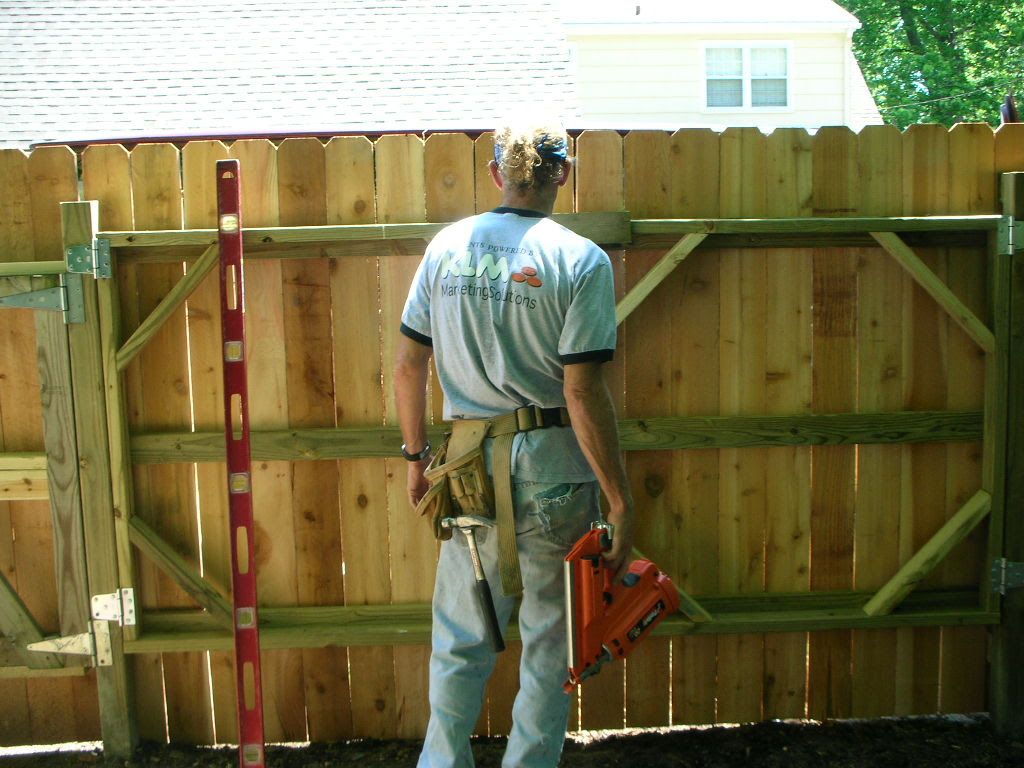
NDE's like James. James is a single father, with a 6 year old daughter named Tasha. He worked in the maintenance department at a local hospital for 11 years, before he was laid off. He has no college degree. For the past year he’s has been struggling to find work. Instead of waiting around for a hand out, James started a business that builds residential fences. But his business is not doing well. According to James, one morning before he went to work, he made his daughter three sandwiches. He told her they needed to last her all day. James, in the meantime, ate nothing.

James is one of many NDEs. Among all entrepreneurs in the United States, 15% of them are NDEs, and these numbers are expected to increase by another 6.6% in the coming years.  And with Durham’s on-going entrepreneurial explosion there are more NDEs than ever, many of whom will be left behind without assistance.
How Can You Help?
You can support these men and women who wake up every morning and fight to provide a life for their families. Like you, they want healthier food options and better healthcare. Like you, they fight to provide an education for their children so that they don’t have to fight these same battles when they reach adulthood.
Just click on the link below to be taken to our CommitChange Campaign.


About Us
The Helius Mentorship Program provides all of the services that any business owner needs in order to create a sustainable business. We provide the same level of mentoring and coaching that you would demand for your own business. And we do so at no cost to the NDEs in our program! This includes one-on-one coaching sessions, free training seminars, and business development tools needed to take an NDE’s business from the idea phase to a fully-operational, self-sustaining business that earns a fair living wage.

But we can’t do it without you.

We Need Your Help
Tax deductible donations of as little as $25 and $50 can provide a month of coaching for a local NDE. Donations of $100 to $500 can help in marketing and licensing of NDE businesses. Just click on the link below. Donating takes less than a minute. All donations come with the seasonal newsletter, including updates and profiles for the Program Participants so that you can see exactly what your donations have provided!

Thank you in advance for your support. By donating to the Mentorship Program, you are giving struggling NDEs a fighting chance. You are providing them with the chance to support themselves and their families with dignity, despite race, education or financial upbringing.

Sincerely,


Geraud Staton
Executive Director
The Helius Foundation

Thursday, February 19, 2015

How Emotionally Intelligent Are You?

Article Review:

I wanted to share this amazing article by Travis Bradberry, contributor to Entrepreneur. this is one of the best articles I've read regarding the strengths of having a strong emotional intelligence, or EQ. He talks about the things that define a great emotional intelligence in great detail. Some of these traits include Embracing Change, Knowing your Strengths and Weaknesses,  or Neutralizing Toxic People.

This is an amazing read for anyone who wants to start building their emotional intelligence. Or, if you are just trying to become a better person, in general.


.

http://www.entrepreneur.com/article/242881


Monday, February 2, 2015

The 10 Most Popular New Businesses According to Inc.

I know that many of the people that come to us ask if there is any chance of them starting a new business if it isn't centered around technology. This is a common concern. But, just because hi-tech businesses get all the glory it doesn't mean they are the only game in town.

Inc. Magazine has just posted a great article that proves it. Check it out here. Tell 'em the gang at Helius sent you.


We loved this article. How about you?

Wednesday, January 28, 2015

The Importance of a Prototype

by Geraud Staton

There are steps that one must go through in order to get a product or service into the hands of your first customer. In fact, in the spirit of there being more than one way to skin a cat, let's say there may be quite a few ways of getting your product into your first customer's hand. In small business, the worst way to do it seems to be the most common. 

Josh Kaufman in The Personal MBA described it this way: "Develop the offering in private, make everyone involved sign non-disclosure agreements, raise millions of dollars in venture capital, spend years making it perfect, then unveil your creation to the astonishment of the world and the thunderous sound of ringing cash registers." Of course, Josh goes on to say that this is not the case. You are more likely to be in for some major disappointment if you operate this way. 

As president of my university Entrepreneur Club, I have seen it hundreds of times. We would have a meeting where we talked about out next project or business venture, and we would open the floor for questions. This is a time when people, who are working on their own businesses, could ask a room of like-minded entrepreneurs for their advice, discuss issues, or tell us about some resource that we may not know about. The Club is amazing for that sort of thing.

Often, I would get some student to approach me at the end of the meeting like he was about to sell me some stolen watches. He'd pull me aside and tell me he had a business idea and could he present it to the group. But, he wanted to make sure no one stole his idea, and he wanted to see if we had signed non-competes for all of the club members. And even then, he only wanted to talk to the most senior members of the group. 

This attitude is, unfortunately, not rare. There is a fear that people are just sitting around in the shadows waiting to nab your idea and make it theirs. I'm not saying there aren't some shady characters in the business world, but I do know this: starting a business is difficult work. And doing it alone makes it even harder. Doing it alone and doing it RIGHT is next to impossible. How do you know what your customers want if you don't ask a bunch of them? How do you find out information about distribution and the sales cycle and financial sources if you don't ask people who know? How do you start looking for partners or even employees if you don't let people know what you've got going on?  

And one of the best ways I know to show what you have to offer is through the creation of a prototype. Prototypes are not just for robotics! You can tell me a hundred times what your product is and what it does. Ask me to repeat it and you'll get a lot of confused looks from me. But, if you show me your product and how it's supposed to work, you will have my full attention.

There are four types of prototypes. 

1. Functional Prototype
This is a model of a product that works, even if it doesn't actually look quite like the finished product. If you're making a stapler that also shoots paper footballs, you may not have the actual football shooter part done. But you can show what the stapler is supposed to do by creating a crude electronic attachment, much larger than the finished product will be. 

You can show this to a client and now your client knows what you are working on and can see how much fun it would be, even if it's not as easy to hold yet. It gets people excited and they know what's coming and may even be able to help you refine the process.


2. The Mock Up
Unlike the functional prototype, this model may not work at all. But it will look identical to the finished product. This is often used for aesthetic products. If you want to create a pistol that looks like one you saw Buck Rogers use when you were a kid, you may not make the gun itself, but rather an actual model so that it feels and looks just like the one you plan to build. 

In some cases, it may not be the exact size of the intended product, but it should be to scale. Car manufacturers and home designs would fit into this category. 

3. The Design Prototype
Maybe you don't have access to a 3D Printer. Maybe you carving skills aren't up to snuff. Maybe you're allergic to moulding clay. That doesn't mean that you can't show the world what your product looks like. It just means you need to slip into the two dimensional world. This prototype, often called a spec. Unlike a true prototype, the design prototype would be used for complicated products.

Usually, the design prototype is used in conjunction with either a mock up or a functional prototype. But, in cases where you either don't have the ability or don't have the time for a 3D model, this is a fine alternative. Just be sure the design shows exactly how the product will look and what it will do. And then, make plans to create a 3D version as soon as you can.

This works better than just telling me about the suit.
Check out more at Gizmodo


4. Video Prototype
This is how one can show a service. One could describe the customer experience from beginning to end, either verbally or on paper, but it would most likely not spark the imagination or create the interest that a video prototype would. If you are offering a unique landscaping service, show us how it works. Show us what you do that makes you better than your competition. Show us the before and after images. Show us what we can expect from your service, beginning to end.

This doesn't have to be limited to the service industry. Particularly if you have a large product. If you're building hand-made, one-of-a-kind canoes, you may not be able to bring one to a presentation. But you can bring a video of the process of creating it. You can show us how well it floats or turns or flips or whatever canoes should be able to do. 


A prototype will make your product or service more memorable for your potential clients, potential investors and even your parents when you try to explain to them what it is you plan on doing for a living. Show and Tell is always better when there is something to look at. You remember the kid who forgot bring her Show and Tell assignment in and just stood up there telling the class about her "thing"? Do you remember what she was talking about?

No. Of course you don't. And no one will remember what you're talking about either.


Thursday, January 22, 2015

6 Ways to Evaluate a New Market

By Geraud Staton

Congratulations! You have decided to get off your duff and put your product or service out there into the world. Good for you! That step alone has put you further than almost everyone you know. You are an entrepreneur, in it's most basic sense. 

en·tre·pre·neur
ˌäntrəprəˈnər/
noun
  1. a person who organizes and operates a business or businesses, taking on greater than normal financial risks in order to do so.

  2. synonyms: businessman/businesswoman, enterpriser, speculator, tycoon, magnate


  3. This is your new reality. Unfortunately, there is still some work to do. Just because you have a product or service to put out there doesn't mean that the world wants it. 

First, a word of caution: take this lightly. Don't let anyone tell you your dream isn't worth it. That includes your friends, family and even professionals like me. If you created a revolutionary stethoscope that you think the world must have, then you better do whatever it takes to give it to the world! 

But, to ease your pain, and to perhaps give you a little more of a solid foundation, here are six things to look for when you have a new product. 

1. How many people are buying the type of products you want to sell? 
People hate market research. I hated market research for a long time. But, it is vital to one's business. If you hate it, hire someone else to do it. Just get it done.

What you want to know is: how many people buy things like what you're selling. This is not the time to get all proud and yell, "No one is making anything like what I'm making!" If you have a new stethoscope, then look at the existing stethoscope market. How many are getting bought? Scale of 1 to 10, where is your product? If you are selling a new tooth brush, nearly everyone buys that. That's a 10. If you are selling books about how to sew your own tuxedo out of recycled rubber tires you probably are only at a 1.

2. How much can you sell it for?
I just heard your blood pressure shoot up. Don't worry! I'm not asking you to price your product yet. I'm only asking you to take a guess as to the price of the type of product you sell. Athletic shoes are $50-200. Tooth brushes are $3-10. 

A 10 in this area is probably a weapon's satellite with lasers or something. A 1 is something small, like butterscotch candies. Yummy.

3. How much will it cost you to get a client?
This is important! If you are selling a weapon's satellite you not only have to build it, which will be expensive, but you are going to have to do a lot of work to sell one. Testing and events and the procuring of contracts. This is massive. If you sell art, maybe you just need to put something on your Facebook page.

That's weapon's satellite is a 1 in this case. It's costly to sell. A 10, on the other hand, is something like a baby-sitting service where you need no overhead and marketing can be word-of-mouth.

4. How many people are doing the same thing?
There are, supposedly, no new ideas under the sun. But, just how many people are doing what you do? How much competition do you actually have?

Let's say you want to sell ink pens. If you sell a pen that writes blue, but you think that it's the ink that really matters. So, your pens have a special blue ink that really writes smoothly and it's organic and it's made from easily acquired materials like grass and blue daisies. As cool as this might be, it's still only about a 3 in the originality department. There are plenty of blue pens that write smoothly.

But, if you sell a pen that also squirts floral scent into the air while you write, you are probably at a 7 or 8. I have never heard of a pen that squirts the smell of lavender while I write with it. There you go. One idea for free. Be sure to send me one when you create it!

5. How soon can you put this out into the world?
This one is easy. You have an idea. You want the world to have it. How long will it take you? I am an oil painter. I can put a painting into the world in about a week. If I want to write a new book, it might take me months, not including the time I have to look for a publisher. If I want to put a cancer drug out into the world, that will take years! 

How soon can you do what you do? If you can do it within a couple minutes, then you're at a 10. If it will take you 5 or 10 years then you are at a 1.

6. Can you keep making money at it once you've sold it?
Anyone who knows me is aware that I am an oil painter. I have been a painter for many years. For a long time I worked in portraiture exclusively. Let's just say that once I sold a painting to a client, I never saw them again. They may have sent me referrals, which is great, but not many people want two portraits of themselves!

Then, I decided to paint whatever the hell I wanted and if people wanted to buy them, great! This moved me further along in regards to this line of questioning. People might only purchase a single portrait, but I have many clients who own multiple works of art by me. I even have a few collectors. This is much better. 

Check out my work, if you'd like. http://geraudstaton.com


I have even dabbled in the print market. This would be the best by far! Now only can I sell a painting or two to the same client, but I can also sell them multiples as gifts. And it gets even better if I sold my work on mugs and t-shirts and calendars. Someone could have their entire apartment furnished with Geraud Staton artwork!

If you sell portraits, odds are good you sell one item and then need to produce another one in order to make any more money. This puts you at a 1. Almost all service businesses are in this category. If you sell a fancy pen that smells like lavender, and also have a dozen other scents, and you also sell the scent refills AND the ink refills, then you are probably at a 9 or 10. 

Your Score:
Your score is arbitrary. I will not tell you that you must have a score of at least 50 out of 60 in order to be a success. There are plenty of successes who were at 10! But, the higher you are up this ladder, the more ease you will have in selling your product. If there are ways that you can improve in a particular area before you release your product, even better. 

But, also, don't spend too much time on this. I'm a firm believer in the "fail fast, fail often, fail cheaply" school of business. Put it out there and don't spend 3 years developing  THE PERFECT pen that smells like lavender. Someone else will beat you to the market. Then, you'll have wasted a ton of money and a lot of your time.

Besides, I really want that pen ASAP. 

Tuesday, July 22, 2014

3 Traits of Successful Entrepreneurs


There are more entrepreneurs out there than most of us know. Unfortunately, we won't hear about many of them. However, there are traits that differentiate many successful entrepreneurs from the rest of the pack. It takes a lot to be successful out there, but you can't do it without these traits,

1) There is no shut-off valve
If you plan on working until 5 and then turning if off for the day, you may not find the success of many entrepreneurs out there. It isn't that you have to keep your nose in your business day in and day out, but you have to think about it constantly. More importantly, you have to enjoy thinking about it. People don't turn off thinking about their loved ones or enjoying hobbies that they have. Your business is a large part of your life. You chose it. You should love it. If you don't, and you feel that you can only think about it for so many hours in the day, then you won't succeed like the person who loves thinking about their business, even at 11pm.


2) Learn constantly 
There is a lot to know when starting and running a business. The moment you decide to limit anything, including the time you think about your business (see above) you set yourself up to fail. Some would argue that knowledge is even more important than time. You need to be constantly learning about your industry, about your customers, about the role you've chosen within the company...and did I mention learning about your customers?

Because there's no way for you to know it all, you also should surround yourself with smart people. There is no room for pride in this. You do not need to be the smartest person in the room. If you are, odds are good that you aren't growing. Find mentors, interview people who do what you're doing, and read everything you can get your hands on.


3) Rethink what I just said about "pride" 
As an entrepreneur, people are going to question your choices all the time. You have to be confident in what you want and in the business you are creating. It is not uncommon for people to turn away from a course of action when doubters surround you. The hard thing with entrepreneurship is that many people don't understand it. And so, they question. Sometimes aggressively. But, you chose this life for a reason. You chose your business because you knew it could do some good in the world. You have to be secure enough in what you're doing that doubters do not sway you.

This does not mean that you should strive to always be right. There are people you should listen to. That's why you keep smart people around you at all times. But, you also have to know how to stick to your guns. If you can't, you and your business are destined to failure.


Have any more tips on how to be successful with your small business? Share them in the comments. We'd all love to hear them.